



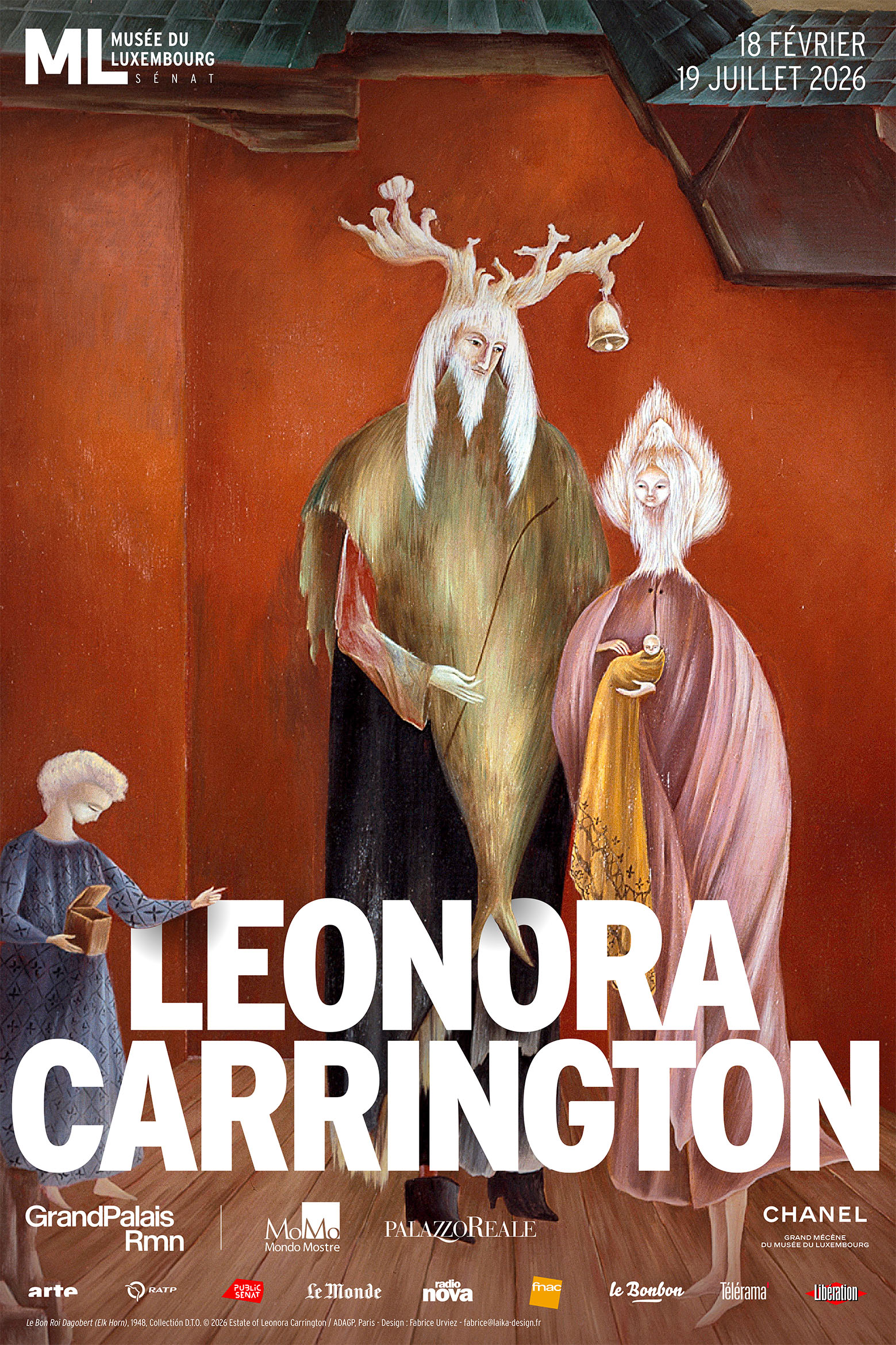
At the museum, Leonora Carrington’s work is revealed in all its richness: that of a free-spirited artist deeply connected to Surrealism, yet whose personal journey shaped a unique vision of art and the world.
Carrington’s life took a dramatic turn when she discovered Surrealism in London in 1936. This encounter marked a decisive turning point in her life and her very conception of art: Surrealism offered her a space where imagination, dreams, and rebellion could coexist without constraint. Driven by this momentum, she quickly immersed herself in this world.
The following year, her encounter with Max Ernst changed the course of her life. A passionate relationship blossomed between them, one that was both romantic and artistic.
I had already fallen in love with his paintings the year before, so I fell in love with the man.
But the painter, who was older, was already married, and Leonora Carrington’s family opposed the relationship. The young woman then moved in with Max Ernst in Paris. There, she found herself at the heart of the Surrealist group’s activities, and the following year she exhibited with them at the International Exhibition of Surrealism at the Galerie des Beaux-Arts in Paris. Leonora Carrington shared common concerns with Surrealism: the power of dreams as a creative force, the association of ideas, the rejection of rational or moral constraints, and a distinct taste for transgression.

The couple then decided to settle in the village of Saint-Martin-d’Ardèche. In a small house, the two artists led a deeply intimate life entirely devoted to their art: they lived and created side by side, transforming their daily lives into a true total work of art. In their home, everything became a medium for expression: Carrington painted the furniture, doors, and windows, while Ernst adorned the exterior with fantastical creatures that gave the entire house a symbolic dimension.
During this period, Carrington established herself as one of the movement’s most distinctive voices. She published her first writings, illustrated by Max Ernst, which already revealed her world populated by hybrid figures, enigmatic narratives, and a rich imagination. In the preface to The House of Fear (1938), he introduces her as “the Bride of the Wind.” But this happy interlude was brutally cut short by World War II. Max Ernst’s imprisonment and rising tensions forced her to flee France.

Her journey then became one of exile and hardship. After a stay in Spain marked by profound trauma, she went through a period of great vulnerability. Yet, far from dampening her momentum, these experiences strengthened her work, further deepening her exploration of the dark recesses of consciousness, so dear to Surrealism.
In 1942, the artist discovered Mexico, which became her adopted home. There, she found a new community of artists—many of whom were also in exile—and developed a more intimate artistic practice. In this environment, art became fully integrated into daily life: her works were displayed in homes and studios, places of freedom and creativity. There, she asserted her complete artistic independence, forging her own path far from constraints.
Throughout her career, Leonora Carrington maintained a deep connection to Surrealism. Fascinated by magic, esotericism, myths, and ancient knowledge, she enriched her work with a mysterious and symbolic dimension. André Breton himself described her as a “witch […] with a velvety, mocking gaze,” highlighting the interest in and fascination with the occult that Carrington shared with other Surrealists.

Through these inner and geographical journeys, the exhibition highlights an artist in perpetual motion, whose life and work are inseparable. A “bride of the wind,” as Max Ernst called her—elusive and free—whose imagination continues to sweep us away.
Check it out
General guided tour
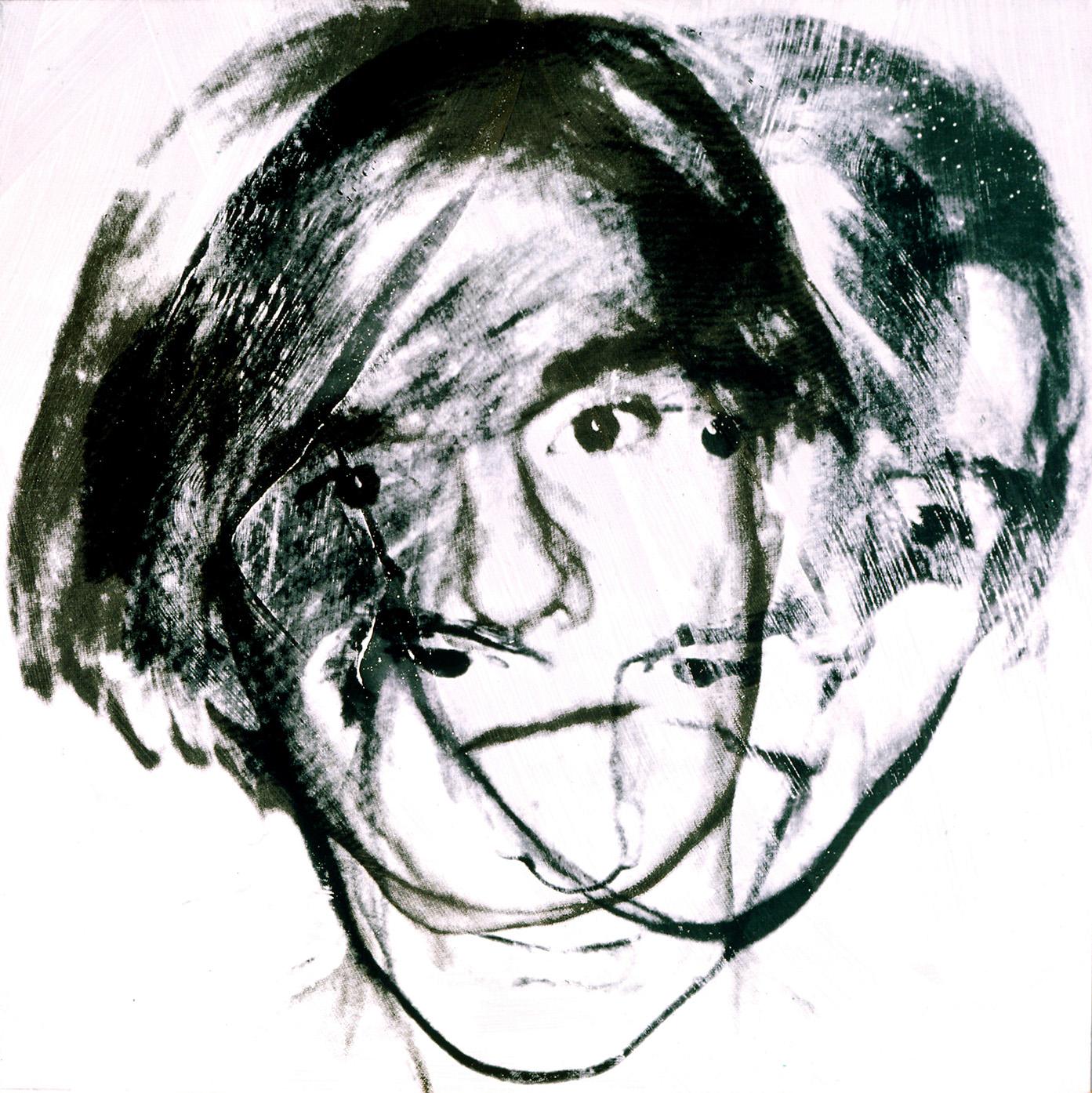
Tickets now on sale for the exhibition "Andy Warhol. La ligne et l'image"
Accessibility: Partially compliant
