



Mexico, her home
Throughout her life, Leonora Carrington traveled through many places, from England to New York, via Paris and Florence. But it was in Mexico, where she settled permanently in 1942, that she built her true artistic and personal home. Far from everything she had known before, she fulfilled her need for freedom there, which went hand in hand with a desire for self-fulfillment. This country became an essential refuge, shared with a community of exiled European artists, and the site of a decisive transformation in her work.
A transformed style of painting
In the second half of the 1940s, her painting style changed radically following several events: the construction of a home in Mexico City, but above all the birth of her two sons. Images of her childhood home resurfaced, evoking ghostly visions and dark memories. But motherhood also infused her with an intense creative impulse: her nostalgia for England and her return to her roots found expression in the form of family scenes and dreamlike works with a softer atmosphere. Motherhood, far from being a mere theme, becomes a creative force that permeates her entire body of work.

Between Surrealism and the Italian Renaissance
In Mexico, Leonora Carrington continued along the path pioneered by Surrealism, while gradually breaking away from it to build a deeply personal world. She also drew inspiration from the Italian Renaissance tradition: the use of tempera, horizontal formats reminiscent of predellas, compositions structured like narrative scenes… Her works, with their meticulous scenes, seem imbued with a sacred aura.
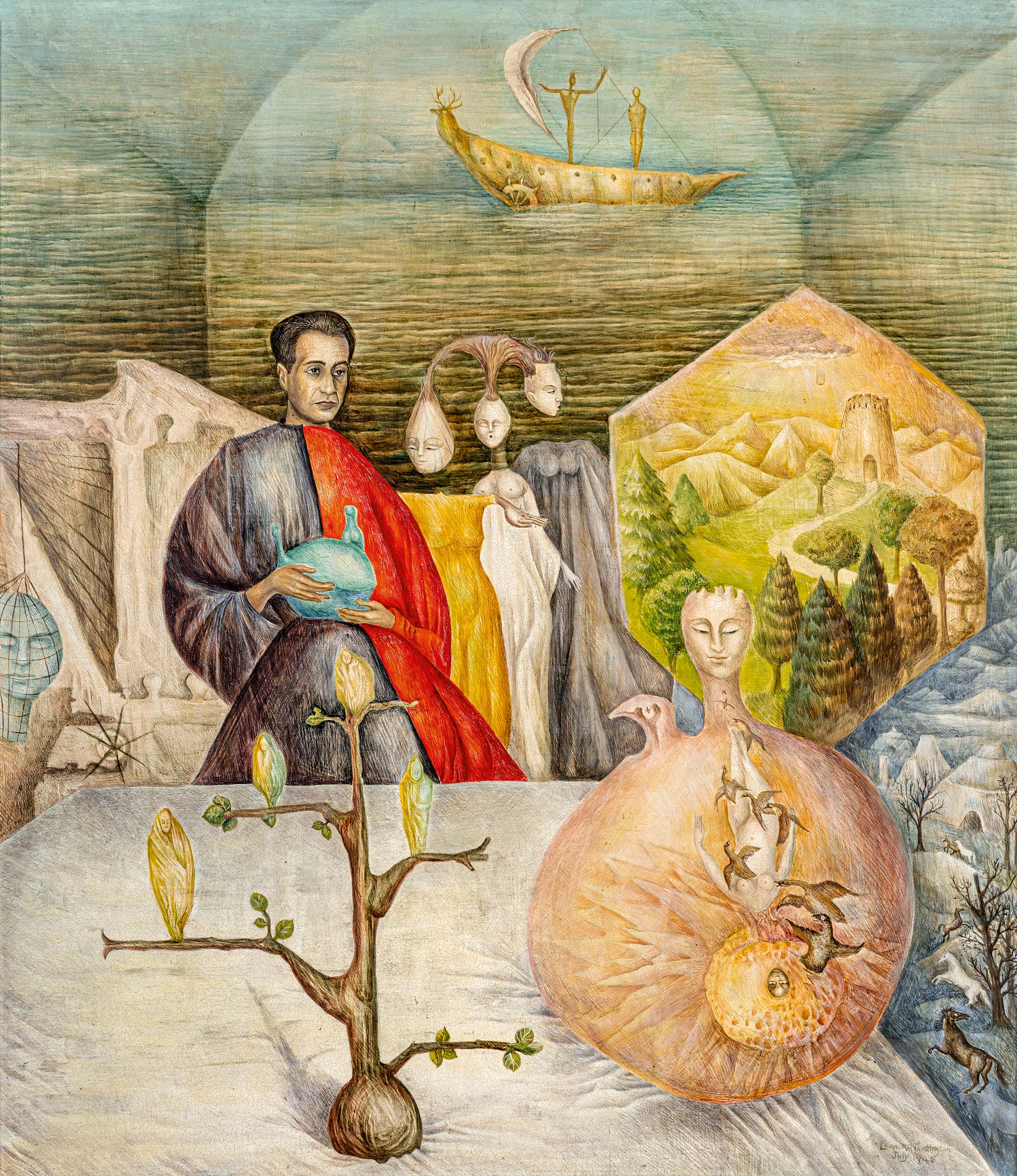
Close-up of the painting Retrato del Dr. Urbano Barnres
It was in this context that she created the 1946 work Retrato del Dr. Urbano Barnres, on view in the exhibition. This portrait, a tribute to the doctor who assisted her during the birth of her first son, evokes the mystery of birth through a series of symbolic motifs. Dressed in a two-tone tunic reminiscent of alchemical rituals, the doctor appears as a priest presiding over the miracle of new life. Before him, a large egg cracks open to release birds and a tree of life bearing strange little swaddled figures. In the background, several landscapes coexist like so many parallel worlds. Here, birth becomes a cosmic mystery, straddling the line between transformation and the emergence of life.
Mexico City, a sustainable creative Hub
In Mexico City, Leonora Carrington not only found a new home—she also forged a deeply personal body of work there. Drawing inspiration from both her European roots and her Mexican experiences, she created a world where everyday family life blends with the fantastical, and where motherhood opened up a whole new realm of creativity. An artist in constant motion, she found in Mexico a place of balance and transformation for her work.
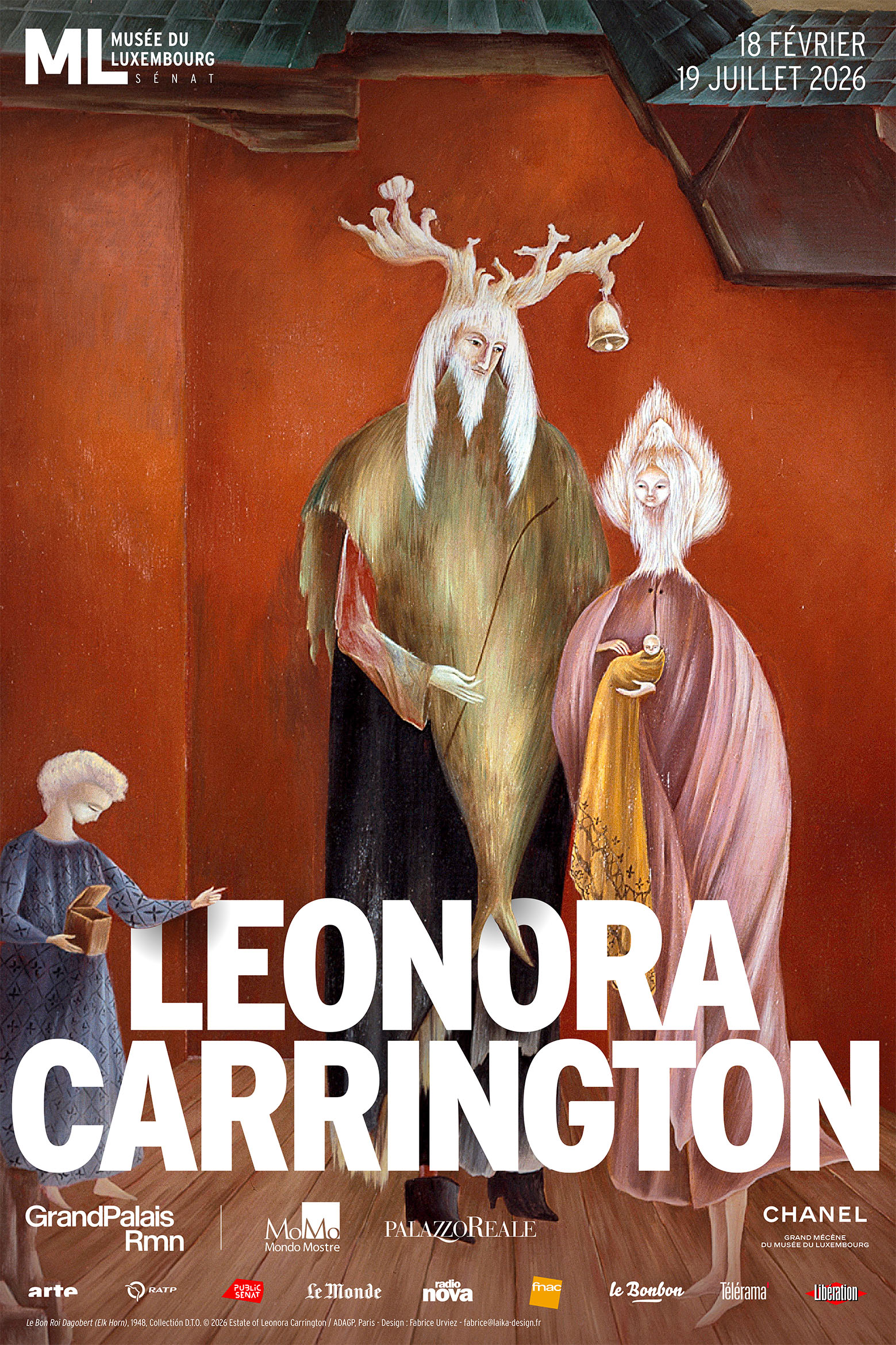
On view through July 19, 2026, at the Museum!
Check it out
General guided tour
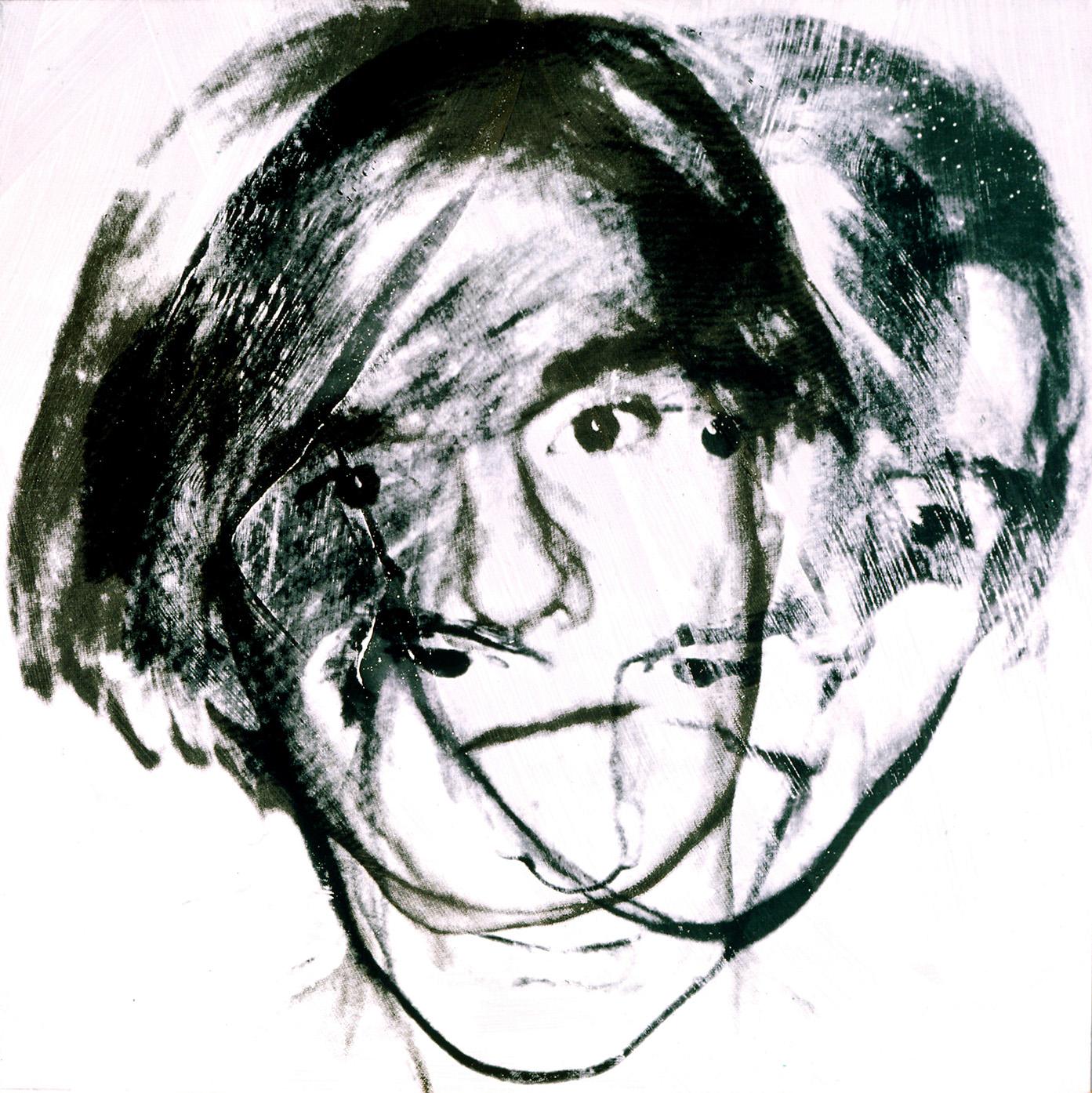
Tickets now on sale for the exhibition "Andy Warhol. La ligne et l'image"
Accessibility: Partially compliant
