


Leonora Carrington: Portrait of a Singular Artist
Discovering a visionary artist
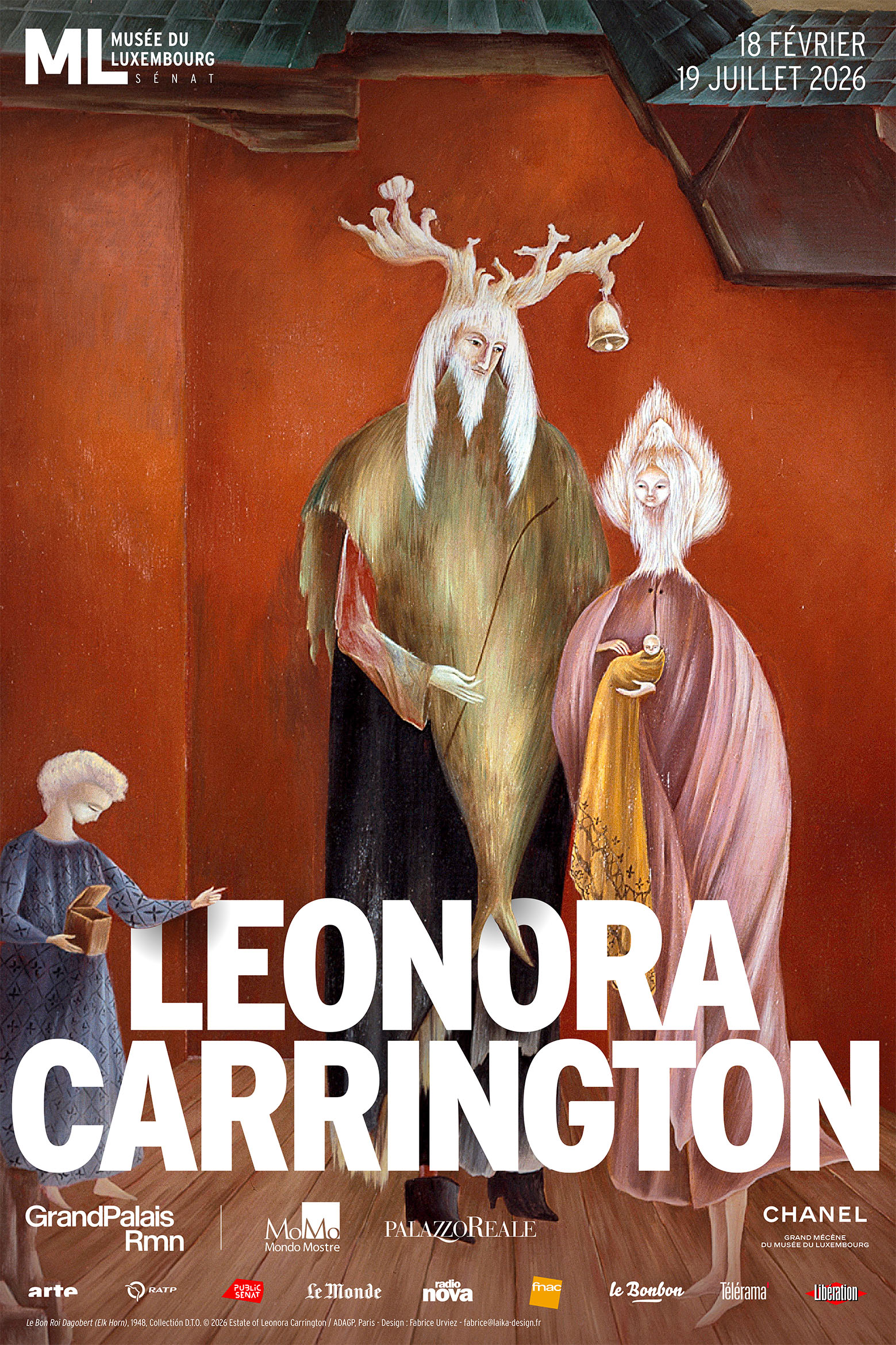
A painter, writer, and major figure of Surrealism, Leonora Carrington left behind a legacy as extraordinary as it is radical. The exhibition, on view at the museum from February 18 to July 19, traces the journey of this free and visionary artist, first close to the Parisian Surrealist circles, then exiled to Mexico, where she became a cultural icon. Through a chronological and thematic approach, it reveals the richness of her universe and offers a fresh perspective on the diversity of her work.
Childhood and imaginary worlds
Born in 1917 in Lancashire, England, Leonora Carrington grew up in the industrial upper bourgeoisie under the distant authority of an absent father and a mother of Irish origin. Immersed in Celtic tales and mythological stories passed down through her maternal family, she began drawing fantastical animals and inventing hybrid worlds at an early age. As a young girl, she rebelled against the strict rules of boarding schools and forged her own imaginative universe.
A decisive encounter with Surrealism
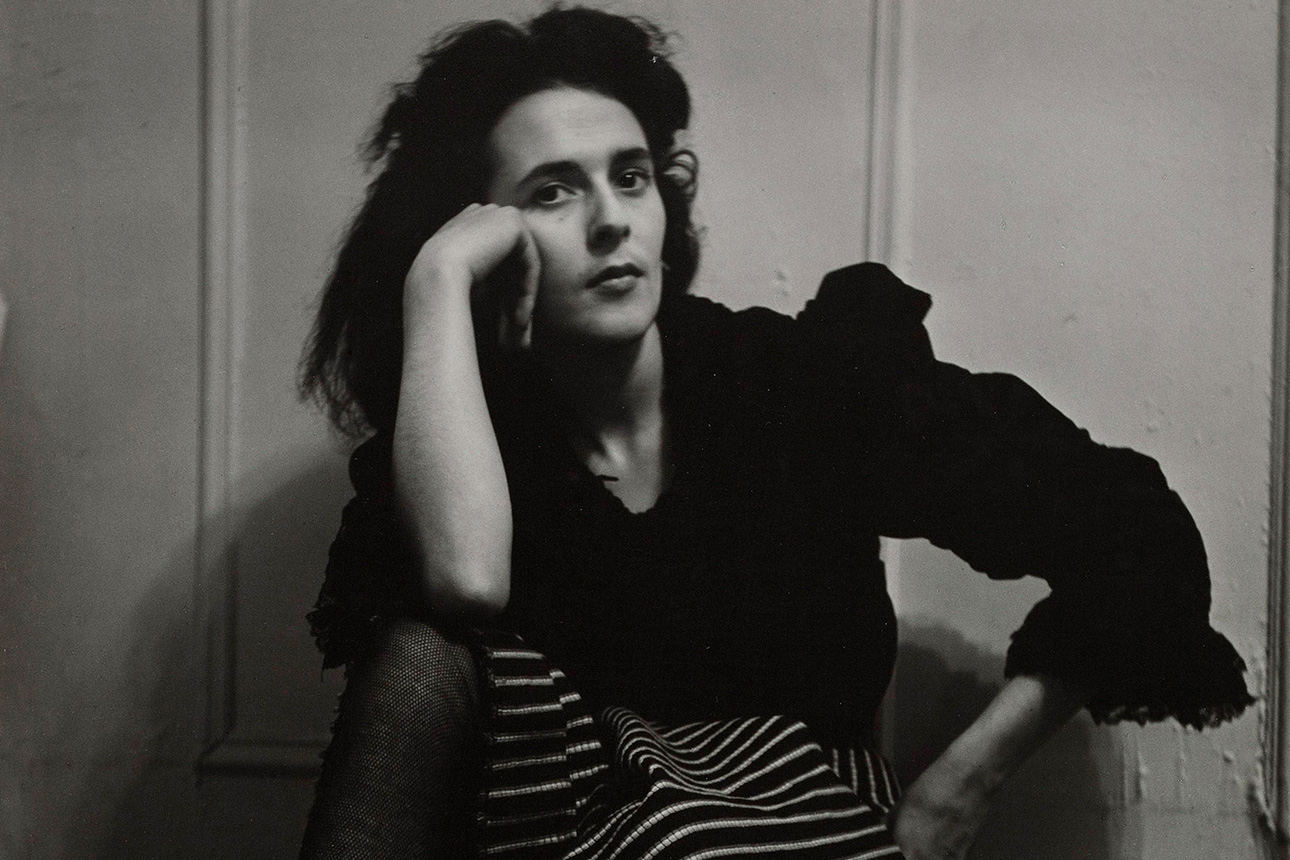
As a teenager, she continued her training in Florence, Italy, where she discovered the masters of the Trecento and Quattrocento and created her series of watercolours Sisters of the Moon, populated by rebellious female figures.
Back in London, she attended the Chelsea School of Art and discovered Surrealism at the International Surrealist Exhibition in 1936. It was there that she met Max Ernst, her future partner and a key figure in her artistic emancipation.
![Leonora Carrington, Double Portrait (Self-Portrait with Max Ernst) [Double portrait (Autoportrait avec Max Ernst)], 1938 © 2026 Estate of Leonora Carrington / ADAGP, Paris © Courtesy Gallery Wendi Norris, San Francisco](/sites/museeduluxembourg/files/2026-02/Leonora%20Carrington%2C%20Double%20portrait%20%28self-portrait%20with%20Max%20Ernst%29%2C%201938%20huile%20sur%20toile%2C%2065%2C4%20x%2081%2C9%20cm%20%C2%A9%20Adagp%2C%20Paris%2C%202026%20%C2%A9%20Courtesy%20Gallery%20Wendi%20Norris%2C%20San%20Francisco.jpeg)
Saint-Martin-d’Ardèche: a haven for free creation
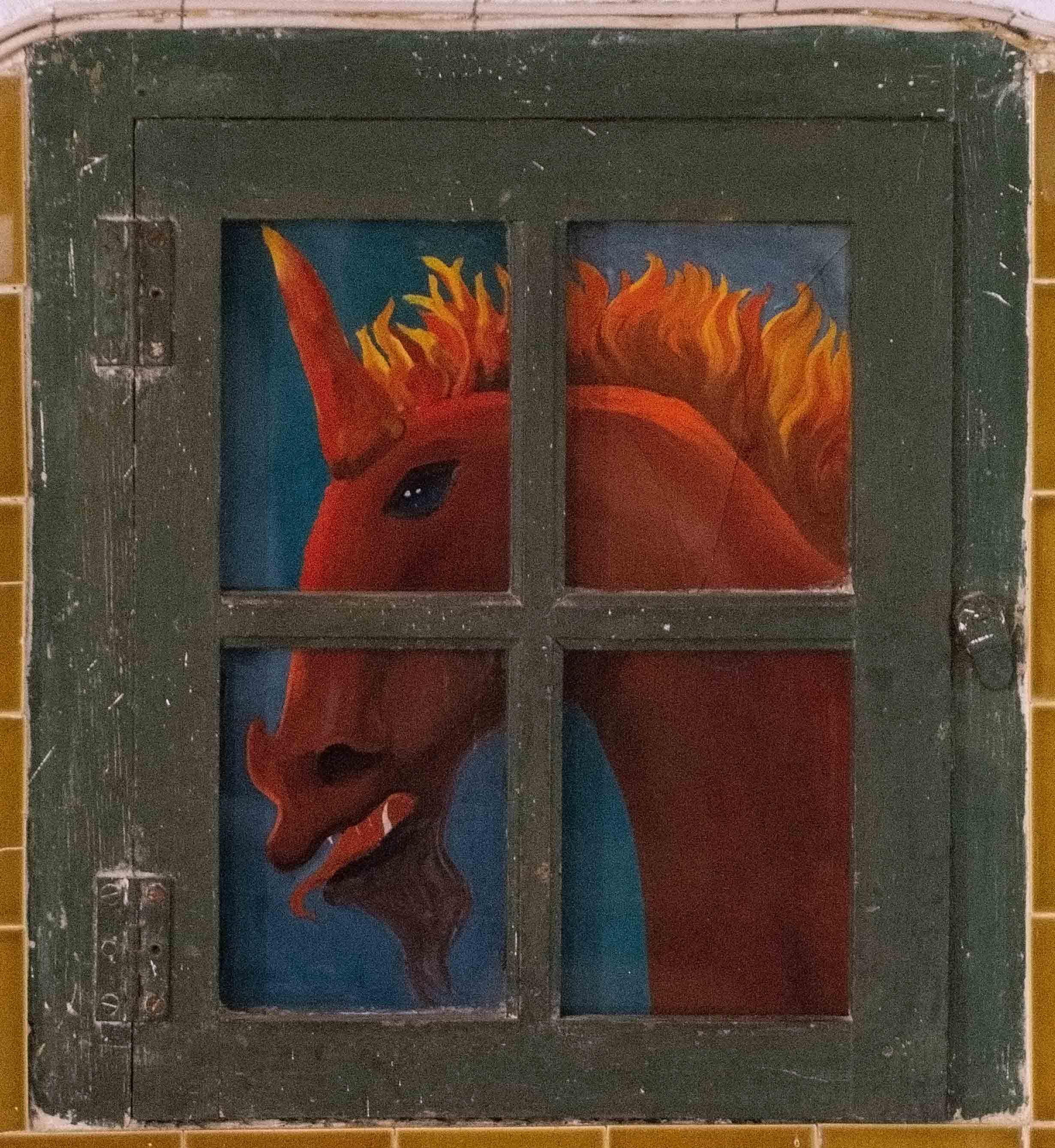
Settling with Ernst in the south of France in 1938, Leonora painted, wrote, and sculpted in constant dialogue with her companion. Their home became a fantastical playground: hybrid animals, female figures, and dreamlike scenes filled her work.
These years marked the affirmation of her singular voice within Surrealism.
Trauma, exile and artistic rebirth
The Second World War brutally disrupted this period of creativity. The arrest of Max Ernst by the French police and his internment forced the couple apart. Carrington fled to Spain in 1940. But weakened by this separation, isolated from her family, and later raped by Francoist soldiers in Madrid, she fell into a severe depression. She was institutionalized in a psychiatric clinic in Santander and endured intense psychological suffering. This traumatic episode, which she would recount a few years later in the powerful text "En bas" (1945), left a lasting mark on both her life and her work.
Released after months of forced confinement, Leonora Carrington crossed the Atlantic and settled first in New York before finding refuge in Mexico. This displacement inaugurated a lasting sense of exile, which fed an iconography of floating creatures, shifting territories, and unstable landscapes. Her work thus became the reflection of this existential drift and of an identity in constant motion.
Mexico: a land of adoption and reinvention
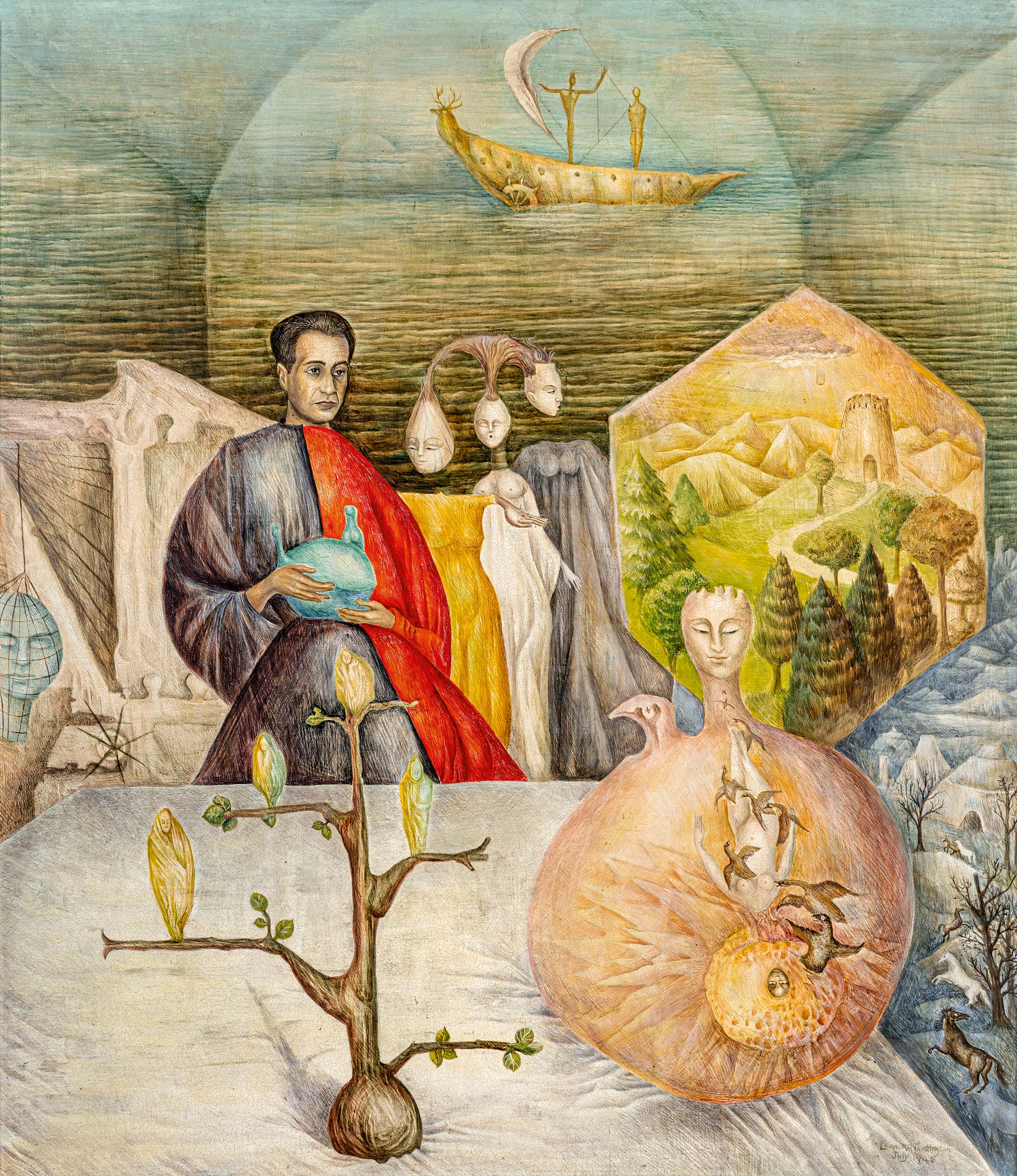
In Mexico, Leonora Carrington continued along the path opened by Surrealism and reconnected with a community of European and Mexican artists. She married the photographer Chiki Weisz and gave birth to two sons. The experience of motherhood became a major source of inspiration and transformed her pictorial world: fairy tales, domestic scenes and protective female figures appeared in works marked by a newfound tenderness and the power of narrative imagination.
Myths, feminism, and legacy
Throughout her life, Carrington explored hidden realms of knowledge shaped by occultism and esoteric rituals. Her works are filled with cryptic symbols, concealed incantations, and initiatory signs.
In the 1960s, the artist became involved with Mexican feminist circles. She turned her art into a tool for sisterhood and political awareness, playing a central role in the feminization of Surrealism: she demonstrated that women were not merely muses, but creators in their own right.
Over time, recognition grew: major solo exhibitions were organized, she was named an honorary citizen of Mexico City and became a member of the Order of the British Empire. She also received Mexico’s National Prize for Sciences, Letters, and Arts in the Fine Arts category.
![Leonora Carrington, A Map of the Human Animal [Une carte de l’animal humain], 1962 © 2026 Estate of Leonora Carrington / ADAGP, Paris © Collection of Marguerite Steed Hoffman / Jeff McLane](/sites/museeduluxembourg/files/2026-02/Leonora%20Carrington%2C%20A%20Map%20of%20the%20Human%20Animal%2C%201962%2C%2043%2C6%20x%2036%2C5%20cm%2C%20collection%20prive%CC%81e%20%C2%A9%20Adagp%2C%20Paris%2C%202026%20%C2%A9%20Collection%20of%20Marguerite%20Steed%20Hoffman%20-%20Jeff%20McLane.jpg)
Passing away in 2011 at the age of 94, Carrington left behind a singular universe in which reality and dream merge, and where imagination becomes both language and refuge. A pioneer of female voices within Surrealism and one of its last great figures, she remains a radical, free, and resolutely contemporary artist.
The exhibition at the Musée du Luxembourg offers a rare opportunity to discover the breadth and richness of Leonora Carrington’s work: a journey into the world of a free, visionary, and unclassifiable artist, whose imagination continues to illuminate our time.
Discover
5 Things to Discover in the Andy Warhol Exhibition
Get a sneak peek with the exhibition trailer!
The exhibition is open! When Drawing Reveals Andy Warhol

Profile: Andy Warhol, A Life in Pictures
How did Andrew Warhola become Andy Warhol?